I worked with an elementary student to complete the Palm Beach Schools Home Education Evaluation and it was a huge success. The young girl came in with her parent and was happy, well rested, and ready to work. I started the home education evaluation by explaining the process and giving her examples of the types of questions I would ask her. She easily answered them and then felt very confident about her abilities. I reassured her that she would do well and this simple explanation helped her get off to a great start. We completed tests from the Woodcock Johnson Tests of Achievement which is a normed test for reading, math, and writing. This young girl appeared to enjoy the work.
This parent also wanted and IQ test for her daughter so we completed that as part of the testing. The IQ test provided insight into the young girl’s potential as well as how she processed information. In this case, the girl was highly verbal and excelled on all sections that required talking. The IQ helped mom understand how her daughter learns.
This young girl was working at her potential and was making great academic progress. I also reviewed her portfolio and mom’s records and then signed off on the Palm Beach home education (home school evaluation form) Palm Beach Schools.
Summer is here and most children across the USA are jumping for joy. If your child is dyslexic, ADHD, ADD, has learning disabilities, or processing problems then they are usually extra exuberant that school is over. They are anticipating a lengthy break from the academic pressures of formal schooling. While I agree that kids need time to be kids, I don’t recommend kids take a total hiatus from learning. Below are 7 ideas that you can apply to help your child or teen.
7 Ideas for a Summer of Great Growth
Consider using any of these 7 suggestions or programs that have the potential to make this a summer of great growth for your child with dyslexia, ADHD, or other learning difficulty. I recommend you research and use the suggestion that makes the most sense for your child and family.
1. C8Sciences.
C8Sciences is a computer and internet based program that helps your child train his or her cognitive abilities in 8 core areas. It was developed by a team of neuroscientist at Yale University. www.c8sciences.com.
2. Neurofeedback.
This is a brain training program that helps individuals learn to self-regulate their brain waves. If you commit to this use it for 25 sessions or more. Check www.GorenewingMinds.com to learn more.
3. Cogmed Working Memory Training.
This is a computer and internet based 25 session working memory program that helps individuals build memory capacity which can translate into improved attention, reading comprehension, and academic performance. My associates and I offer this program. www.cogmed.com.
4. Orton Gillingham (OG) based multisensory reading tutoring.
If your child has dyslexia this is the time tested gold standard for helping individuals overcome their phonological processing weaknesses. OG reading programs include the Barton Reading and Spelling System and the Wilson Reading Program. My dyslexic child was taught with an OG reading program for about 30 months and now enjoys reading. www.Bartonreading.com.
5. Counseling using cognitive behavior therapy.
Counseling can be effective to help kids experience tremendous personal growth and I recommend you work with a counselor that uses cognitive behavior therapy because it is goal directed counseling. This means you, your child, and the counselor set goals to achieve during counseling. This is quite different from psychotherapy where kids explore their feelings. If you are doing counseling, you want to work toward meaningful goals.
6. Real life money skills.
Many of today’s teens can often solve algebraic math equations but don’t know how to balance a checkbook or compute a 15% tip without using an app. Make this summer the summer where you open a bank account for your child and start teaching financial principals of making, saving, and giving money. This is my goal for my children and I’m using resources from Dave Ramesy and his program Foundations in Personal Finance. http://www.daveramsey.com/school/foundations-home-school.
7. How to think positively.
Many children with dyslexia and ADHD have an automatic negative outlook and are pessimistic. Wouldn’t it be great to have a summer of change so your child starts school with a more positive outlook? Try using these two books. If you have a younger child look into Dawn Huebner’s book What to do if you grumble too much: A kids guide to overcoming negativity. If you have a teen check out Dr. John C. Maxwell’s book Thinking for a change:11 ways highly successful approach life and work. Both books are great tools to use to help your child harness the power of positive thinking.
After Selecting the Program- Now Making the Difference Requires…
If you use the right program for the right length of time and work at it enough during the summer you’ll make this your child’s summer of great growth. The key elements for success are:
1. Use the right program
2. Use the right program for the right length of time (all summer)
3. Do it 3-5 days per week
4. Work with the right person
5. Incorporate an element of fun into learning
There is hope that this is your child summer of amazing change and results in personal confidence, improved self-image, and positive thinking. Contact me if you have questions about any of these programs or if you want testing for your child.
https://jimforgan.com/wp-content/uploads/2013/06/end.jpg15362048Jimhttps://jimforgan.com/wp-content/uploads/2025/11/logo-jf-300x138.pngJim2013-06-03 17:16:172013-06-05 12:38:39Your Dyslexic or ADHD Child: How to Make This a Summer of Great Growth
I read this interesting post “FOODS THAT CAUSE ADHD BEHAVIOR” from Dr. Frank Barnhill, a pediatrician in SC. Many parents often wonder if their child’s behavioral difficulties are due to food allergies. Dr. Barnhill explains below.
A child’s diet often determines whether or not they show signs and symptoms of ADHD.
Many parents have noticed their child’s behavior to be more impulsive or more hyperactive after eating certain foods. This increase in ADHD behavior is particularly more common during times of the year when children and teens tend to eat or drink more foods that contain sugar, dyes, caffeine, and preservatives… Read more here.
If you are concerned about your child’s behavior it’s important that you log everything he or she eats. I recommend you keep a log for at least two weeks so you can analyze foods and compare them to your child’s behavior. In addition to your food log, keep a written record of his or her school performance for the day. On the day(s) that his or her behavior is poor then really study the foods and food label ingredients to determine if there are any patterns.
Taking this step will help you understand your child even better.
https://jimforgan.com/wp-content/uploads/2025/11/logo-jf-300x138.png00Jimhttps://jimforgan.com/wp-content/uploads/2025/11/logo-jf-300x138.pngJim2013-04-24 16:17:022013-04-24 16:17:02ADHD and Food
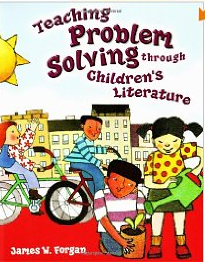
Kids can use books to learn how to become proactive problem solvers. Often students with learning or behavioral difficulties are characterized as inefficient in recognizing and solving problems. By learning a problem-solving strategy and applying it to children’s literature titles, kids can learn to become independent and effective problem solvers.
The article below is one I wrote for teachers (and it was published in a teacher journal) to help them learn how to teach kids to become effective problem solvers. Parents can apply these principles too because I believe we want to empower our children to independently learn to solve problems. You are not always going to be there to solve your child’s difficulties so one of the best skills we can give our kids is to teach them how to effectively solve problems. This is not a skill most people learn on their own and if they do, it is learned through the school of hard knocks. Let me show you how to teach your child to be a problem solving superstar by using popular books that you can check out in the library.
Click below to download my article or if you are a teacher, I wrote a book that has 40 lesson plans that you can use and that are accompanied by a reproducible activity for your students. It is available on Amazon.com.
If you need help with your child then use the form above to contact me.
https://jimforgan.com/wp-content/uploads/2025/11/logo-jf-300x138.png00Jimhttps://jimforgan.com/wp-content/uploads/2025/11/logo-jf-300x138.pngJim2013-04-11 19:57:562013-04-11 20:00:08How to teach children to solve their own problems
I evaluate children starting at age 4 and parents often email me with concerns about their child’s learning and/or behavior. I recently received this email from this astute parent. “My son is almost 5 years old. He’s in preschool and the teachers think he may have some issues with his processing and/or maybe dyslexia? Can you evaluate him?”
“Absolutely” was my answer to this question. In fact, I saw the warning signs in my own son start to emerge between ages two and three. The delayed language, difficulty saying words, and difficulty with rhyming, and no interest sounds, letters or playing games with words. You don’t always have to be a trained psychologist to pick up on the warning signs and astute parents often know their preschool child may have some type of learning difficulties. If you suspect your young/ preschool child may have a learning or processing issues the next question parents often ask themselves is, “Should I get it checked out or just wait a while and see if they outgrow it?”
The research clearly supports that early intervention is effective and helps prevent problems that can surface during the elementary years. If your preschooler has a learning difficulty then immediately getting him or her working with the right therapist, program, or specialist can make a tremendous amount of difference. Six months of gains at the preschool age can take eighteen months to make when your child is in elementary school. My professional opinion is to start now and don’t take a wait and see approach. An evaluation can help put your mind at ease and /or give you direction about how to proceed to help give your child the best opportunity to learn.
Don’t you want your child to work to his or her potential? As I’ve written in previous articles, the right tutor, the right program, the right amount of time, and starting at the right age make all the difference! Start now and trust your gut. A mother’s instinct is usually right.
Use the contact form or call me ASAP to get started because a little investment of money now will save you from spending a lot of money later. I’m available to help.
Dr. Jim Forgan
https://jimforgan.com/wp-content/uploads/2025/11/logo-jf-300x138.png00Jimhttps://jimforgan.com/wp-content/uploads/2025/11/logo-jf-300x138.pngJim2013-02-26 20:46:212013-02-28 17:57:38Astute Parents Notice Preschoolers with Learning Difficulties.