
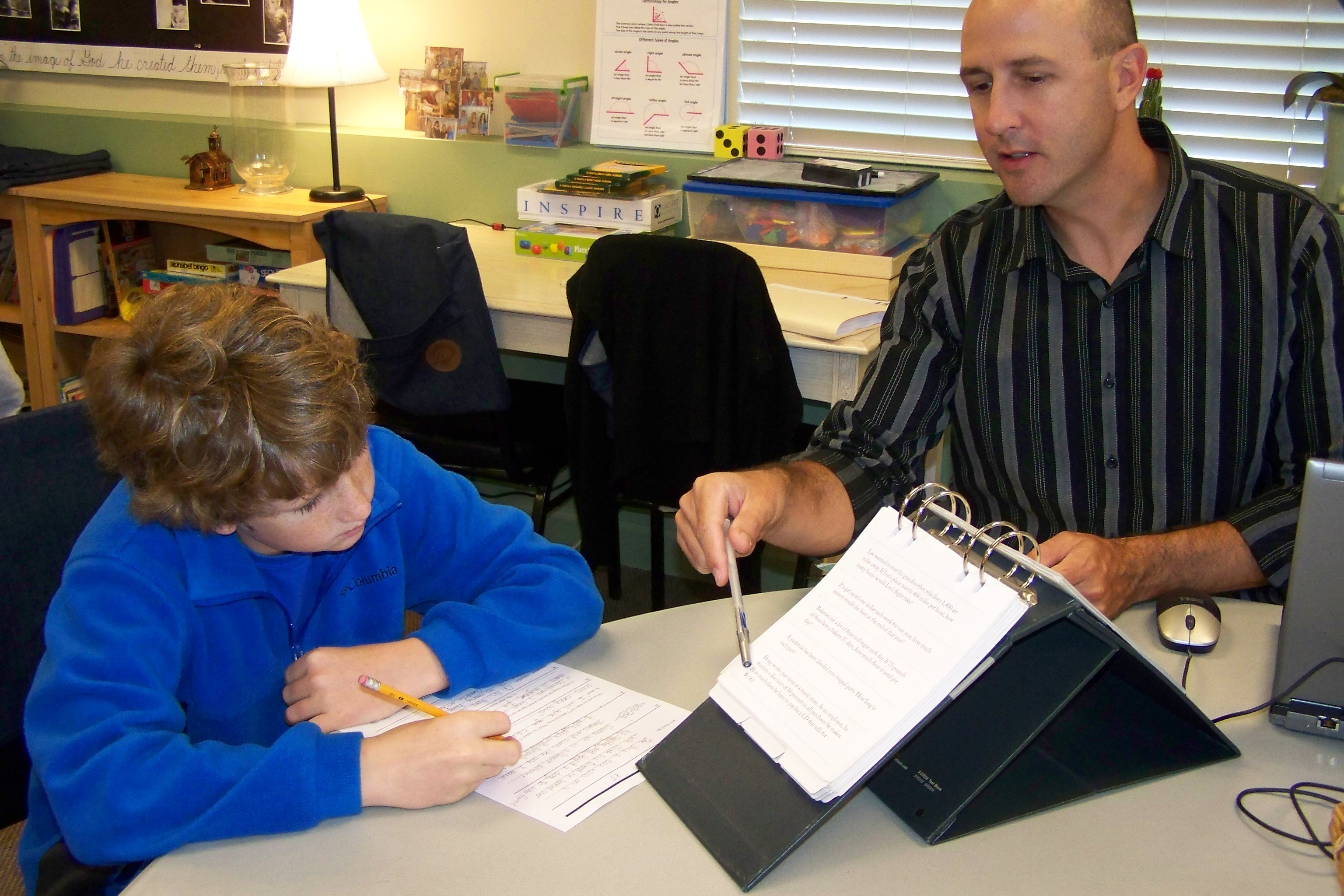
These are ‘hot’ topics of interest

dysgraphia test

Writing Help

For various reasons some children do not enjoy writing. You can help make writing fun this summer by assisting your child in writing his or her own book, creating mazes, and by learning keyboarding. When my children were young I purchased a blank book from an online retailer because this book had a durable cover and blank pages inside.  When we went on vacation I took pictures so that upon returning home, my child and I selected and printed 10-15 favorites.  Then we taped them in the book and my child either wrote about the picture or told me what to write.  The kids loved it and now, a decade later, we have lots of great books filled with memories.

Many kids enjoy doing mazes and you can suggest that your child create his or her own mazes for others to complete. You can use graph paper to help with the lines or just use blank paper.  Your child has to write the directions so people know what to do because some mazes are started at the end, are completed with the opposite hand, or get penalized if they hit a dead-end.

One of my best classes was taking a typing class but many schools don’t formally teach keyboarding anymore. This summer you can give your child a life skill that is crucial in today’s world.  Use Type to Learn, Mavis Beacon, or other programs and require 10-15 minutes per day of keyboard training.  Going forward this skill will make your child’s life easier.

Some children struggle with writing because they have dysgraphia which makes penmanship look extremely messy, the same letter is formed different ways, letters don’t sit on the line, and children can have difficulty copying. Some kids with dysgraphia think great thoughts but can’t transfer them to paper.  If your child has these warning signs, consider a dysgraphia evaluation.

Contact us if we can help you. 561-625-4125

Your Child is More Than a Label

I coached a parent who expressed that some people view her child by the labels / diagnoses her child has rather than the the specific behaviors he displays.  I agreed that some people hear a label and don’t always understand your child’s uniqueness. Your child is more than a label of ADHD, learning disability, dyslexia, dysgraphia, autism, Asperger’s, speech delayed, ADD, or any other label given. When your child gets a diagnosis it results in a label that is used to qualify your child for accommodations or special services.  It helps provide a starting point for you to understand and learn more. That’s it.

Take the term learning disability. It’s broad. The label learning disability does not specifically indicate what challenges your child. If your child has a learning disability you address your child’s areas of weakness such as sounding out words, improving reading comprehension, getting thoughts into writing, or solving math problems.  A teacher who has a child with a learning disability in her class must know what the areas are that need worked on.  Often it’s helpful if you, the parent, provides information about your child’s specific weaknesses.  Then these areas can be emphasized.  Remember that while working on a child’s weaknesses is important, you don’t want to overlook your child’s natural interests and affinities. Those natural talents and gifts must be built upon as well.

How can you help others realize your child is more than a label? Advocate for your child.  If your child has autism explain to the teacher, therapists, and babysitter how autism manifests in your child.  Explain the behaviors your child displays.  Explain any communication difficulties.  Personalize your child so others don’t hear the label autism and rush to draw conclusions.  If your child with autism has an affinity for technology, explain that too.  Let the sitter know which apps he enjoys best. Tell the soccer coach what thighs of things may set your child off during practice and how to respond if your child starts to pace while hitting his head.

How You Can Help.

You can help others view your child as more than a label by complimenting your child in front of that person. If you walk your child with ADHD into school in the morning, say nice an loud, “You were such a good helper by putting your back pack on the back of your chair. That helps mommy and your teacher. You are so sweet.”  Children with labels often don’t receive enough public affirmation.  When you affirm your child in front of others, it plants seeds in the person’s mindset.  They start to see your child the way you do, as a loving and wonderful person and not as a label.

If your child has a label make sure you work with a tutor, therapist, coach, or professional who sees past your child’s label and can help with skills. For example, not all children with ADHD have huge meltdowns, suffer from low self esteem, or have friendship problems.  So if you work with a professional who insists on addressing these areas, it wastes valuable time.  You want to work on the specific challenges for your child while also nurturing strengths.

The mom I worked with needed help in getting her elementary age child with a learning disability started on tasks such as homework, picking up, getting reading in the morning, etc.  We specifically worked on how to get her child how to get going on his own.  We discussed things she had already done such as use a timer and yell. We decided the new approach she would take would be a positive approach to earn extra time on his favorite task, Minecraft.  When he was ready on time or started without more than one reminder he earned an extra 5 minutes of Minecraft time.  If he battled or did not comply he lost Minecraft time.

If you need help with your child contact us because we see beyond any label and recognize your child for the unique person he or she was created to be. (561) 625 4125

Jupiter Dyslexia Reading Tutor

Learning to read doesn’t have to be a struggle and you can receive help from a Jupiter Dyslexia Reading Tutor. We help parents help their child overcome reading difficulty with a one to one individualized approach designed to meet each child’s unique needs. When it comes to learning to read a one size fits all approach is not effective.

If your child’s not reading up to par then consider specialized reading tutoring. Most tutors offer a general approach but our tutoring is highly specialized. We use methods that are based on effective research and that work.

We use Orton Gillingham based reading methods that are based on effective research and that work.  These types of programs are one-to-one and highly effective because they teach a child to read using the six most common syllable types in order from most to least common.  This ensures your child experiences a lot of success which builds confidence and self-esteem.  We use the Barton Reading and Spelling System, the Wilson Reading System or the Lindamood-Bell Reading Program.

There are five main areas that your child has to master in order to become a proficient reader. The five areas are: understanding sounds, phonics, fluency, vocabulary, and comprehension.

For example you may read the next sentence but not understand; “The cognitive fluency impaired the prefrontal cortex and inhibition which affects his theory of mind.”  Did you understand it? If not then you had a vocabulary breakdown. If this were your child, we’d help your child by teaching vocabulary within the context of reading.

It’s important to pinpoint the reading breakdown and then provide support.  Your child may have a specific deficit that only reading specialists can identify.  If you are already providing tutoring but it’s general homework help or general tutoring then this is not the right tutoring.  Jupiter reading tutoring is highly specialized and specific to help your child obtain the maximum reading gain in the least amount of time.

Your child doesn’t have to shed tears over reading. If your child struggles with reading, come see the dyslexia reading specialists at Forgan Educational Services and our Jupiter dyslexia reading tutor.

Jupiter Counselor

I’ve recently collaborated with an excellent Jupiter Counselor who specializes in working with families and children. Brian Neal is an experienced Jupiter counselor grounded in Christian principles. Brian’s a family man who has been married for a long time and has four children so he understands the challenges facing today’s moms, dads, and children ranging from addiction to bullying, to social media influences.

If your marriage or family is in a crisis or approaching crisis levels, contact me today to I can connect you with Brian. As a male Jupiter Counselor he maintains a professional and confidential practice. Many Jupiter counselors are generic but Brian’s specialty of families, marriage, and children using Christ centered practices sets him apart . You can restore your family and rebuild broken relationships using his goal directed counseling. Thus, rather than simply exploring feelings, Brian believes in setting goals and directing talk to achieve meaningful and lasting positive change.

When you need help for marriage issues, adolescent issues, anxiety, depression, addiction, or any other area affecting your family, contact Brian.  He will counsel you to hope and healing.

Teaching Students With ADHD: 10 Steps for Success

Teachers, you can help your students with ADHD by following these 10 steps.

Step 1. Develop a good rapport. Getting to know the child is core to his, her, and your success. Review 504 plan or IEP with the child and parent.

Step 2. Seat the student in his or her optimal area (not always the front row).

Step 3. Pair the student with a buddy or partner.

Step 4. Set up a secret signal, if needed.

Step 5. If needed, give the child a job or responsibility.

Step 6. Make ongoing accommodations.

Step 7. Frequently check in with student during instruction.

Step 8. Before any test provide the following: inform student about the types of questions, provide or complete with class completed study guide.

Step 9. When misbehavior occurs, implement the mess up, make up technique. The student can earn back a privilege if he or she does an act to make up for the blunder.

Step 10. Communicate with parent. Share student’s success and areas of concern. Start the meeting with positive statements.