These are ‘hot’ topics of interest

Preparing Your Child for Hurricane Stress

Children face the same type of distress as you as we all prepare to experience a major hurricane. Young children have never experienced hurricane stress like this. You must prepare your child without scaring them. I recommend you evacuate the area if you have children under 10 years old. If you stay for the hurricane explain that this will be a really bad storm and there could be a lot of unusual noise such as banging, pounding, howling wind, and clattering. Prepare your child for the atmospheric pressure change that may occur in their ears. Your child may feel like they are on an airplane with the changing air pressure surrounding the storm.

Hurricane Irma

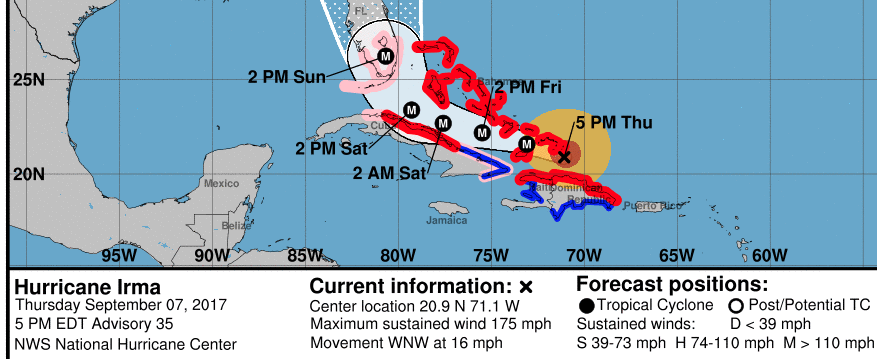
It appears Hurricane Irma will make landfall during daylight hours which is beneficial and less scary for children who are naturally afraid of the dark. Show your child the safe space in your home and discuss how you may be in there for hours. Explain that you need them to be on their best behavior and do what mom and dad say. Have quiet activities for your child to do during the storm such as coloring or watching a video using headphones. Have your child’s blanket, snuggie, lovey, or what ever you call her security item with you at all times.  Allow your child to comfort her baby doll or your pet because she will simultaneously be comforting herself.

During the storm process your child may require additional reassurance that everything will be all right. She may want to stay by your side. Some children experience heightened emotions and moods. These are all typical behaviors from stress. As I wrote in, Stressed Out! Solutions to Help Your Child Manage Stress, children’s stress may emerge in unusual behaviors or rituals. Your child’s agitation might manifest as hyper energy or an inability to self calm and settle down. This experience causes some children to overgeneralize and believe any storm will have the same intensity as Hurricane Irma.

Three strategies to help children manage hurricane stress

After the storm, try these three strategies to help your child manage stress. First, ask your child to draw a picture of the hurricane experience. Art can be therapeutic and it helps children express inner feelings. After your child is finished with the picture ask, “Tell me about your drawing.” Allow the child to explain their art. Your child won’t have a right or wrong answer but just follow his lead and ask open-ended questions.

If your child is now fearful of any storm, create a written plan. List out the steps you’ll take if there is a storm. Post these on the refrigerator. Then help your child practice a positive inner dialogue by saying, “It was scary during Irma but I was ok. I’ll be ok during this storm too.”

Third, once in recovery mode, involve your child in helping because children feel valued when they can help. For example, your child may hold a bake sale to raise money to donate to an organization such as the Red Cross. When your child helps others it helps place her focus on others and take her mind off of her worries.

Call us if you need professional help managing your child’s stress.
Helping Stressed Out Children

Stress. It is a constant in today’s society. Whereas some level of stress can keep us motivated and engaged, too much can overwhelm and exhaust us. Stress is not the exclusive domain of adults anymore. It is concerning that negative signs of stress are becoming increasingly common in children today, even in toddlers and preschoolers, as society has become more hyper-connected and its demands have become more frenetic. Pediatricians report an uptick in the number of patient visits related to stress, even in children as young as kindergarten and first grade.

Helping Stressed Out Children

When your child is stressed and anxious, you may feel it and see it in your child’s behaviors or he or she may suffer silently. Increased emotion, sensitivity, and tears are just a few of the ways stress overload emerges in children. Changes in eating habits and sleep are also common warning signs that stress could be developing into a problem. Learning more about stress is an important step in helping your child learn how to handle stress, which is a skill set that will be invaluable regardless of the age. There are many things you can do to help your child perceive challenges accurately, develop effective solutions to events, and keep stress in perspective

Your own responses to stress provide your child with the best examples of how to respond to changing situations and challenges. Children often mirror parents’ behaviors and attitudes. I’ve recently co-authored a book to help you and your child. It can help you as you and your child face the daily challenges of life so energy won’t be sapped by indecision and worry but will be channeled into productive ways to handle stress. It’s titled Stressed Out! Solutions for Helping Your Child Manage Stress and available in book stores and online.

Gifted testing 2016 change

Gifted class requirements changed in Palm Beach Schools during the 2016 school year. The IQ test is now the only requirement from the psychologist’s testing.  Common IQ tests include the WISC, WPPSI, RIAS, and the Stanford-Binet. An IQ test takes an hour or less to administer and  we score it right away so you get the scores.

The gifted class requirement is that your child should have an IQ score of 130 or higher on an individually administered IQ test. Second, your child’s current teacher must fill out a gifted characteristics checklist and endorse more than half of the characteristics as applicable to your child. A certified teacher must complete the checklist so this is typically done by your child’s preschool or elementary teacher.

Gifted testing takes about one hour and your receive results the same day in summary form. All clients testing with us receive a free video tour of the office. The video tour allows your child to see where he or she will be working and this helps put kids at ease. When kids know where they are going it helps reduce anxiety. In addition, you tell your child he or she will be doing activities rather than testing. Some children benefit from having a pre-meeting with the psychologist and we offer that too.  Some children perform better when they know who they will be working with so a pre-meeting can help reduce anxiety and prepare children for the IQ test.

If you are on the fence about testing we also offer a brief gifted screening that gives an estimated IQ and lets us know if your child is close to the 130 mark. If they are close enough then full gifted testing is recommended. Schedule soon if you’d like gifted testing because the prime slots fill up quickly.

dysgraphia test

Writing Help

For various reasons some children do not enjoy writing. You can help make writing fun this summer by assisting your child in writing his or her own book, creating mazes, and by learning keyboarding. When my children were young I purchased a blank book from an online retailer because this book had a durable cover and blank pages inside.  When we went on vacation I took pictures so that upon returning home, my child and I selected and printed 10-15 favorites.  Then we taped them in the book and my child either wrote about the picture or told me what to write.  The kids loved it and now, a decade later, we have lots of great books filled with memories.

Many kids enjoy doing mazes and you can suggest that your child create his or her own mazes for others to complete. You can use graph paper to help with the lines or just use blank paper.  Your child has to write the directions so people know what to do because some mazes are started at the end, are completed with the opposite hand, or get penalized if they hit a dead-end.

One of my best classes was taking a typing class but many schools don’t formally teach keyboarding anymore. This summer you can give your child a life skill that is crucial in today’s world.  Use Type to Learn, Mavis Beacon, or other programs and require 10-15 minutes per day of keyboard training.  Going forward this skill will make your child’s life easier.

Some children struggle with writing because they have dysgraphia which makes penmanship look extremely messy, the same letter is formed different ways, letters don’t sit on the line, and children can have difficulty copying. Some kids with dysgraphia think great thoughts but can’t transfer them to paper.  If your child has these warning signs, consider a dysgraphia evaluation.

Contact us if we can help you. 561-625-4125

Your Child is More Than a Label

I coached a parent who expressed that some people view her child by the labels / diagnoses her child has rather than the the specific behaviors he displays.  I agreed that some people hear a label and don’t always understand your child’s uniqueness. Your child is more than a label of ADHD, learning disability, dyslexia, dysgraphia, autism, Asperger’s, speech delayed, ADD, or any other label given. When your child gets a diagnosis it results in a label that is used to qualify your child for accommodations or special services.  It helps provide a starting point for you to understand and learn more. That’s it.

Take the term learning disability. It’s broad. The label learning disability does not specifically indicate what challenges your child. If your child has a learning disability you address your child’s areas of weakness such as sounding out words, improving reading comprehension, getting thoughts into writing, or solving math problems.  A teacher who has a child with a learning disability in her class must know what the areas are that need worked on.  Often it’s helpful if you, the parent, provides information about your child’s specific weaknesses.  Then these areas can be emphasized.  Remember that while working on a child’s weaknesses is important, you don’t want to overlook your child’s natural interests and affinities. Those natural talents and gifts must be built upon as well.

How can you help others realize your child is more than a label? Advocate for your child.  If your child has autism explain to the teacher, therapists, and babysitter how autism manifests in your child.  Explain the behaviors your child displays.  Explain any communication difficulties.  Personalize your child so others don’t hear the label autism and rush to draw conclusions.  If your child with autism has an affinity for technology, explain that too.  Let the sitter know which apps he enjoys best. Tell the soccer coach what thighs of things may set your child off during practice and how to respond if your child starts to pace while hitting his head.

How You Can Help.

You can help others view your child as more than a label by complimenting your child in front of that person. If you walk your child with ADHD into school in the morning, say nice an loud, “You were such a good helper by putting your back pack on the back of your chair. That helps mommy and your teacher. You are so sweet.”  Children with labels often don’t receive enough public affirmation.  When you affirm your child in front of others, it plants seeds in the person’s mindset.  They start to see your child the way you do, as a loving and wonderful person and not as a label.

If your child has a label make sure you work with a tutor, therapist, coach, or professional who sees past your child’s label and can help with skills. For example, not all children with ADHD have huge meltdowns, suffer from low self esteem, or have friendship problems.  So if you work with a professional who insists on addressing these areas, it wastes valuable time.  You want to work on the specific challenges for your child while also nurturing strengths.

The mom I worked with needed help in getting her elementary age child with a learning disability started on tasks such as homework, picking up, getting reading in the morning, etc.  We specifically worked on how to get her child how to get going on his own.  We discussed things she had already done such as use a timer and yell. We decided the new approach she would take would be a positive approach to earn extra time on his favorite task, Minecraft.  When he was ready on time or started without more than one reminder he earned an extra 5 minutes of Minecraft time.  If he battled or did not comply he lost Minecraft time.

If you need help with your child contact us because we see beyond any label and recognize your child for the unique person he or she was created to be. (561) 625 4125