 The Daily Alphabet
Understanding Reading Problems Using the Reading Rope
Your child can read every word on a page but struggle to tell you what it means. Or they may explain a story beautifully when you read it aloud yet have trouble reading it themselves. How can both be true?
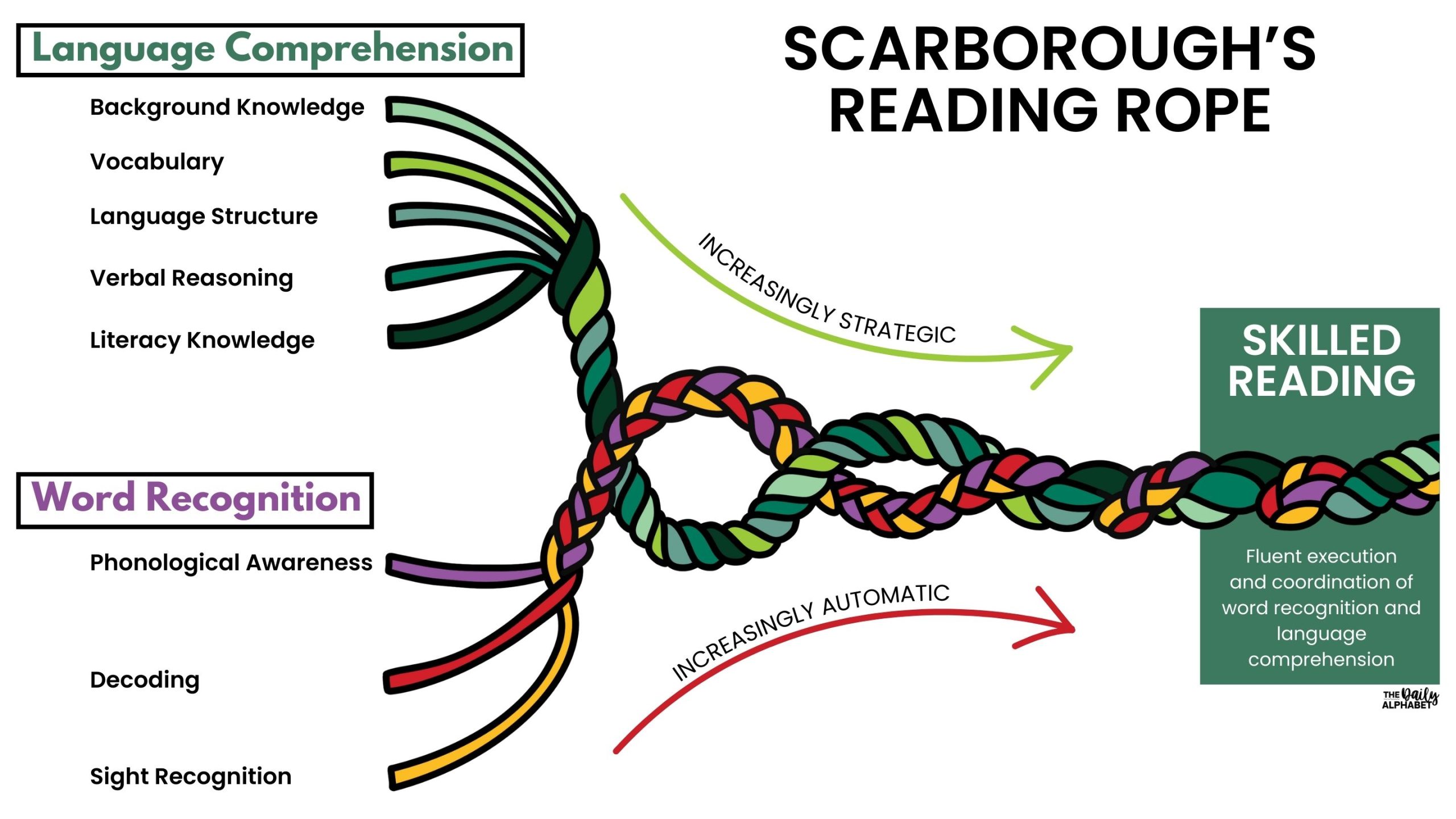
Scarborough’s Reading Rope offers a helpful picture. Imagine many small strands woven into one strong rope. Skilled reading depends on two groups of strands working together: word recognition and language comprehension.
Recognizing the Words
These strands help a child notice sounds in spoken words, connect letters to sounds, sound out unfamiliar words, and eventually recognize familiar words quickly. When identifying each word takes a great deal of effort, a child has less attention available for the meaning of the passage.
Comprehension: Understanding the Message
These strands include vocabulary, background knowledge, understanding sentences, making connections and inferences, and knowing how stories and other texts work. A child may read words accurately but still need support understanding what the words mean together.
What Can You Do?
Notice where reading becomes hard. Does your child struggle to read the words, explain what they read, or both? Ask the teacher what they notice, too.
Keep sharing books and conversation. Reading aloud, discussing new words, and talking about your child’s interests help build language and knowledge, even while they are learning to read independently.
Ask about the right kind of support. If sounding out words is difficult, ask how the school is teaching and checking word-reading skills. If understanding is the concern, ask about vocabulary, background knowledge, and comprehension. Some children need support in both areas.
From a school neuropsychologist’s perspective, the rope is a reminder to look closely at a child’s pattern of strengths and needs. A reading struggle does not tell us how capable a child is. It tells us which strands deserve attention and where the right support can help.
Here’s An Example
Imagine your child reading The Magic School Bus Inside the Human Body, in which Ms. Frizzle’s class travels through Arnold’s body. Your child may love the illustrations and eagerly explain what happens to the bus when you read the book aloud but struggle to read words such as stomach or bloodstream independently. That suggests their understanding is a strength, while word recognition may need support.
Another child may read those words smoothly but have trouble explaining what the stomach does or why the bus moves through different parts of the body. For that child, language comprehension, including vocabulary and background knowledge, needs more attention.
Both children are curious about the same book. Scarborough’s Reading Rope helps us ask a more useful question than “Is my child a good reader?” It helps us understand which part of reading is working well, and which strand needs support. Once identified, you can hire a reading specialist to target that area and provide support.
Testing Provides Specific Answers
Our testing can help you identify which part of your child’s reading is not working so you can provide specific support rather than taking a general, “I hope it helps” approach. Call (561) 625 4125 to discuss helping your child. We test for dyslexia, ADHD, autism, learning disabilities, processing problems, and more. JimForgan.com.