

Posts

“I’ll Do It Later…” Helping Your Teen Overcome Chore Procrastination

Getting my teen to complete home chores is a problem and the procrastination is real. “I’ve asked three times, and it still isn’t done.” If getting your teenager to complete chores feels like a daily struggle, you’re not alone. And if your child has ADHD, autism, dyslexia, or another learning difference, the challenge may have less to do with motivation and more to do with executive functioning.

As a school neuropsychologist, I often remind parents that executive functioning is not about intelligence or willingness. It is the brain’s management system which are the skills that allow us to plan, organize, remember, initiate tasks, manage time, shift between activities, regulate emotions, and follow through until something is complete. For many neurodivergent teens, these skills develop differently and often require more intentional support.

Executive Functioning

Research has consistently shown that individuals with ADHD experience significant differences in executive functioning, particularly with task initiation, working memory, inhibition, and sustained attention. Many autistic adolescents also experience executive functioning differences, especially with cognitive flexibility, planning, and adapting to unexpected changes. Students with learning disabilities may expend so much mental energy meeting academic demands that fewer cognitive resources remain for everyday responsibilities at home.

What may look like procrastination is often something much more complex. Your teenager knows exactly what needs to be done but struggle to get started. They may become overwhelmed by a chore that seems simple to others because they cannot determine the first step. They may become distracted halfway through, lose track of materials, or forget multiple-step directions. These are executive functioning challenges and not character flaws.

Provide Support

That doesn’t mean we lower expectations. Instead, we change the support. Think of chores as opportunities to build independence while providing the scaffolding your teenager’s brain needs today. Research on executive functioning and skill acquisition suggests several strategies can make a meaningful difference:

  • Break chores into small, clearly defined steps rather than giving broad directions like “clean your room.”
  • Use visual checklists so your teen doesn’t have to rely solely on working memory.
  • Pair chores with consistent routines to reduce the need for constant decision-making.
  • Use timers or the “first…then…” approach to help with task initiation.
  • Offer choices when possible, as autonomy increases motivation.
  • Provide immediate, specific praise that recognizes effort, strategy, and persistence rather than perfection.
  • Gradually fade supports as your teen demonstrates increasing independence.

Perhaps the most important shift is changing the question from “Why won’t they do it?” to “What’s getting in the way?” That simple change moves us from blame to problem-solving.

Our goal isn’t to raise a teenager who never procrastinates. Our goal is to help them understand how their brain works, discover strategies that fit their unique strengths, and develop the confidence to manage life’s responsibilities.

Someday they’ll live on their own. The greatest gift we can give them isn’t a perfectly cleaned bedroom today but it’s the executive functioning tools they’ll use for a lifetime. I teach an in person executive functioning course for teens that can help your child learn these important skills. Learn more here.

Call (561) 625 4125 to discuss helping your teen. We test for ADHD, dyslexia, autism, learning disabilities, anxiety, processing problems, and more.
executive functioning course for teens

The Skills Schools Expect but Rarely Teach

Would your child benefit from learning skills in an in-person executive functioning course for teens? Parents often tell me the same thing about their teenager: “My child is smart, but they’re disorganized, forgetful, overwhelmed, and constantly procrastinating.” If that sounds familiar, your teen may not lack intelligence or motivation. Instead, they may need stronger executive functioning skills.

What is Executive Functioning?

Executive functioning is the brain’s management system. These skills help teens plan ahead, stay organized, manage time, remember assignments, regulate emotions, and follow through on tasks. Research and clinical experience consistently show that executive functioning skills are essential for academic success, independence, and confidence.

The challenge is that many middle and high school students are expected to “just know” how to manage increasing academic demands without ever being directly taught these skills. As coursework becomes more complex, students who struggle with organization, planning, and attention can begin to feel frustrated, discouraged, or anxious.

Jupiter or Port St. Lucie Executive Functioning Course

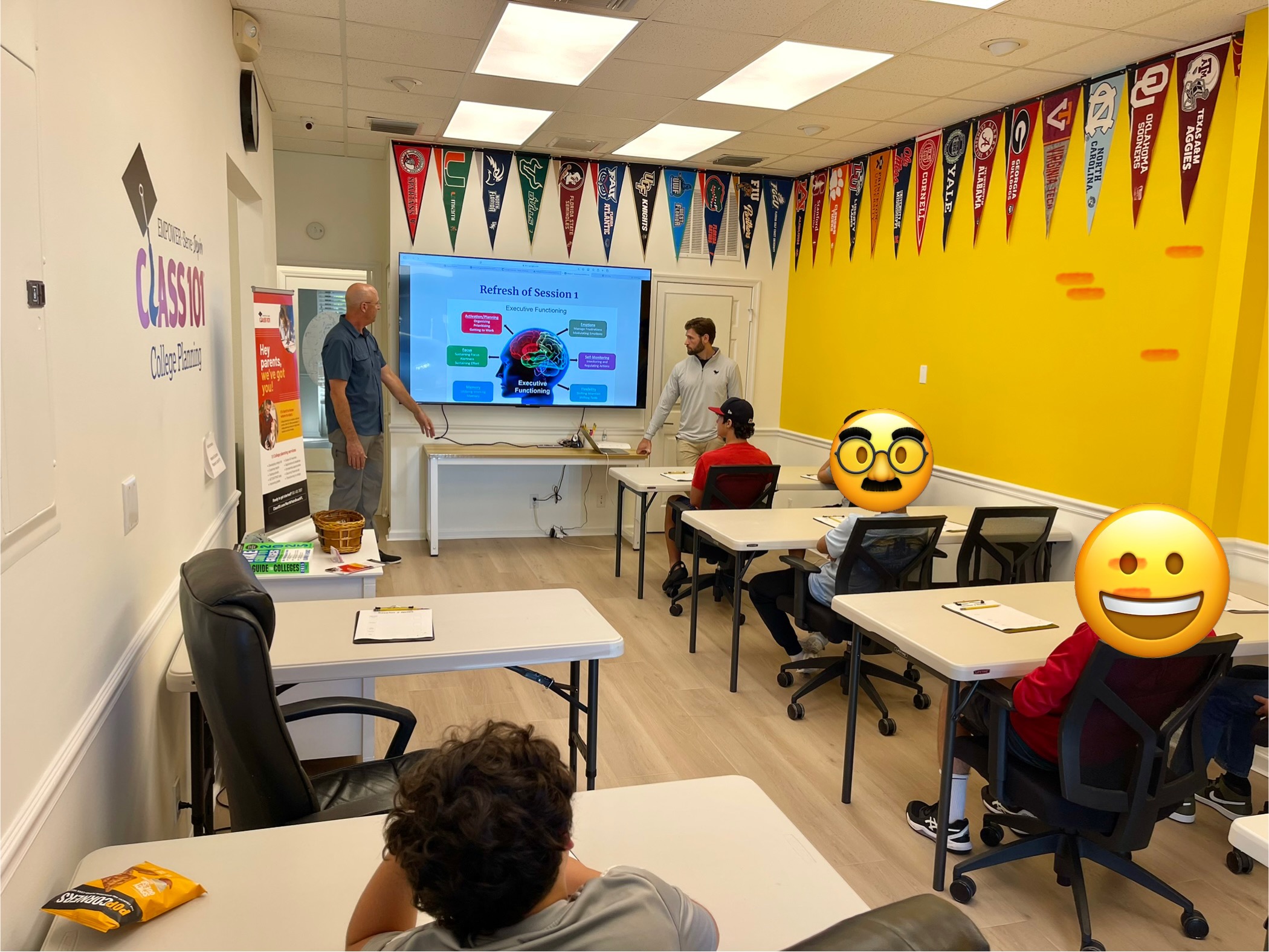
That is why I created my executive functioning course for students in grades 6–9. In Jupiter or Port St. Lucie, we teach practical skills in a fun, interactive, and supportive environment. Students participate in activities, scenarios, and guided discussions that help them learn strategies related to organization, planning, time management, memory, and attention.

Course Benefits

A big benefit of executive functioning instruction is increased independence. Parents often feel exhausted from constantly reminding their teen about homework, projects, missing assignments, and schedules. Stronger executive functioning skills help students rely less on parents and develop more ownership of their responsibilities.

Another major benefit is improved confidence. Many teens with executive functioning weaknesses begin to believe they are “bad at school,” when in reality they simply need systems and strategies that match how their brain works. Learning practical tools can help students feel more capable and successful.

Sign Your Child Up: Executive Functioning Course for Teens

Our executive functioning course for teens is taught by male school psychologists and includes hands-on instruction, take-home materials, and a follow-up Zoom session to reinforce skills and accountability. Executive functioning skills are not fixed traits. They can be taught, practiced, and strengthened over time. Investing in these skills now can help your teen succeed not only in school, but also in future college, career, and life responsibilities.  Our next 2026 course starts in August. Learn more at JimForgan.com/executive or call 561-625-4125 to register.

Smart but Scattered Adolescent Workshop

A parent described her son to me, “Sam is struggling with school and his grades. This year in 6th grade he is struggling with the workload, executive functioning, and expectations of the grade. The demands are more. I constantly have to stay on top of him or he’d be failing.”  This mom was describing her son’s executive functioning weaknesses. He was smart but scattered. Executive functioning skills are crucial for success in school, social settings, and everyday life.

One Day Executive Functioning Skills Workshop for Grades 6-9

On Saturday, March 22, my team and I are offering an in-person one day executive functioning course for students in grades 6 through 9.  Your student can join us fun, interactive activities to learn executive functioning skills related to Organization, Planning, Time Management, Memory, and Attention. The group size is limited to 12 students.  We use classroom instruction combined with games, scenarios, and videos to illustrate points and practice skills. Students receive written handouts to keep which summarize the new skills.

How to Develop Executive Functioning Skills

Developing executive functioning skills is an ongoing process in adolescence, and teens often need instruction to improve these areas. Weak executive functioning skills can impact academic performance, relationships, and overall well-being, so interventions like workshops and coaching can be helpful if your teen struggles in these areas.

Adolescents face academic pressures, social dynamics, and life changes. Teens with strong executive functioning skills can handle uncertainty and stressful situations with more resilience. By understanding and supporting the development of these skills, your student can improve their ability to navigate the complexities of adolescence and prepare for greater independence as they grow into adulthood. Join us so your student can learn these important skills for success.

Students from our last workshop completed a course evaluation and commented they enjoyed, “The engaging activities.” “The skills it taught me.” “The coaches.” “How interactive it was.” “It helped me understand more about how to approach challenging things.”

Contact Us to Sign Up for the Executive Functioning Skills Workshop

Call (561) 625 4125 if you would like to sign up or if you need school neuropsychological testing for dyslexia, ADHD, autism, or to give you understanding and answers about your child.  Check out the book I wrote on executive functioning and available on Amazon.

Helping Disorganized, Forgetful, and Scattered Adolescents

A parent described her eighth-grade son to me, “He has struggles following multiple oral instructions at the same time. His information retention in the short term is challenging especially for un-preferred topics. He has completed homework and forgot to turn it in. He waits until the last minute to start projects. What a hot mess!”

Executive Functioning Workshop Teens

This mom was describing her son’s executive functioning weaknesses.  The term “executive functioning” encompasses our brain’s ability to manage different systems such as planning, organizing, maintaining effort, remembering, self-regulating, attending, and completing tasks.  School success depends, in part, on having strong executive functioning skills.  Executive functioning weaknesses can cause smart kids to become scattered, disorganized, and forgetful.  These weaknesses might be accompanied with ADHD or learning disabilities but can also be stand alone difficulties.  Our executive functions improve with age and fully mature in our late teen years to early twenties. Thus, there’s hope for your student’s growth.

Learn Skills to Improve

Executive functioning skills can be learned, practiced and improved.  This month I am offering an in-person executive functioning course for students in grades 6 through 9.  Your student can join another school psychologist and myself for three, 90-minute sessions of fun, interactive activities to learn executive functioning skills related to Organization, Planning, Time Management, Memory, and Attention. The group size is limited to 10 students.

Grades 6-9 Mastermind Workshop

We will use games, scenarios, and videos to illustrate points and practice skills. Students receive written handouts to keep which summarize the new skills. We are approaching this mastermind course for teens using a cognitive behavioral framework. That means that if you can change your thinking and learn new skills, you can change your behavior.  Your student can learn skills for success this year and beyond.  Are you tired of being your child’s only executive assistant and ready for your adolescent to hear about success skills from someone other than yourself?

If you want to learn more about executive functioning check out my book The Impulsive, Disorganized Child: Solutions for Parenting Kids with Executive Functioning Difficulties. Call (561) 625 4125 if you would like to sign up or if you need school neuropsychological testing to give you understanding and answers.

Inflexible Children Struggle

Inflexible children struggle. “We don’t spring any unexpected changes on him or he has a huge meltdown,” explained one mom.  Her eight-year-old son had daily tantrums when things did not go his way.  Mom was concerned he might have ADHD so we evaluated him to determine the root cause of his meltdowns. Our evaluation showed it was not ADHD but rather he had executive functioning difficulty with shifting attention and cognitive flexibility.

One Track Mind

Perhaps you’ve heard the saying, “That person has a one-track mind.” That saying captures what happens when inflexible people get something stuck in their minds and they can’t get it out.  They perseverate.  Their brain is like a train riding down a track and it can’t make a shift to a new track until it gets to a junction.  Unfortunately for some people, their brain goes on for ‘miles’ before it reaches a junction.  As a parent you might think, “Just get over it and move on” but it is not that easy for your child.

Transition Difficulty

Inflexible children often have difficulty making transitions at home and at school.  They often see things their way and have difficulty going with the flow.  This contributes to their melt downs and stubbornness. Inflexible children are not always pleasant to be around.  They can be bossy when playing and want to do things their way.  This inflexibility can create friendship issues with same age peers and inflexible children might prefer to play with younger children whom they can boss around.

Executive Functioning

The term executive functioning describes our brain’s management system.  Kids with executive functioning difficulty need to learn skills rather than take pills to help them.  Mom was happy medication was not the answer for her child. “My Day is Ruined!: A Story Teaching Flexible Thinking” by Bryan Smith is a book you can read with your child to teach skills.

 Call (561) 625 4125 to discuss your child as we test for executive functioning difficulty, autism, dyslexia, ADHD, and more.