
Posts

When Kids Say, “I’m Better Off Dead.”

A concerned parent came to us for testing because on more than one occasion her son said, “I shouldn’t be alive. I’m better off dead.” Before contacting us, this mom had already hid all the sharp knives in her home.  She was wise to seek professional support rather than dismissing or scolding her child for saying that since suicide in children is a real concern. According to the Center for Disease Control’s website and Youth Risk Survey Data, among adolescents aged 12-17, 18.8% had seriously considered attempting suicide, 15.7% made a suicide plan, and 8.9% attempted suicide. These percentages are higher for youth of color and those identifying as LGBTQ.

Our school neuropsychological testing revealed he had ADHD and learning disabilities which caused significant school problems. This boy was viewed as the class clown and became the one people pointed to and assumed was the disruptive cause when there was a problem. This contributed to him feeling rejected by most of his peers and teacher. Furthermore, his learning disabilities interfered with his reading, writing, and spelling so he was academically behind his peers. This caused embarrassment and he felt stupid.  His circumstances created the perfect storm for him to cry out to his parent that he was better off dead.  This boy had no suicidal plan but he did not have the appropriate words to express he wanted help and understanding.

This boy’s mom wanted to know how to help and our testing results report provided recommendations.  They obtained a public school plan called an Individualized Education Plan which provided specialized instruction. As a family they began working with a counselor to improve home communication and understanding.  Step by step they made changes to help their child’s mental health and learning.

If you or your child have suicidal thoughts or behaviors, call or text 988 for the suicide and crisis lifeline. You know your child best so if you are concerned about a potential learning disability, autism, or ADHD, call to discuss your child (561) 625 4125.
Three Ways to Help Kids With Anxiety

Is your child a worrier?  Anxiety in kids is real. Excessive worrying in children might show up when he throws up every day before school, she has to know your whereabouts at all times, she can’t sleep in her own bed, he is afraid of a family member dying, and she worries so much about what peers think so it stifles decision making.

Stress is Real

These are real issues and the pandemic has elevated anxiety in children.  Causes of anxiety include genetics as anxiety often runs in the family tree, past experience such as being bullied, or temperament.  Summer is a great time to help your child and teach new coping skills.

First

One way to help your child is to teach him or her how to identify triggers. What precipitates the anxiety?  Your child might not want you to leave him and when you go to the store he worries you’ll get in a car accident.  Once you know the anxiety trigger, teach your child to decide if it is a rational or irrational fear. Thus, you leaving is the triggering event that leads to his irrational fear of an accident.  This takes lots of discussion as well as teaching him how to self-calm through breathing.

Second

Second, use books or a program. To help a younger child, you could read What to Do When You Worry Too Much: A Kid’s Guide to Overcoming Anxiety with your child. For a teen you can read The Anxiety and Worry Workbook: The Cognitive Behavioral Solution by David Clark. Younger children often benefit from using the Coping Cat program with their parent. You can learn more at www.copingcatparents.com.

Third

Finally, if needed, seek a professional counselor.  There are many counselors that use a cognitive behavioral therapy approach to treatment. This type of counseling helps your child change negative thoughts into more positive thoughts.Counseling helps children cope with and manage anxiety symptoms while gradually exposing them to their fears to help them learn skills. PsychologyToday.com is one good source.

Call us if we can help you help manage anxiety in kids (561) 625 4125.

stress in children

Three Ways to Help Children Manage Stress

Today’s children feel the pressure of standards based testing, high performance expectations, social media pressure, and complicated family dynamics. It’s no wonder why doctors and psychologists report an uptick in stress and anxiety.

Stress occurs because of a stressor which is simply a thing that causes a stress response.  For example, going to a party where your child might not know anyone is a often a stressful event.  Your child’s body reacts to this and it causes a stressful reaction like an increased heart rate and difficulty focusing.  Anxiety often follows which is the unpleasant feeling of worry that alerts your child to a threat. In this case, “What if other kids laugh at me and think I’m a loner?”

Parents stress to so consider your own stress level.  When you are stressed it can carry over to increase your child’s stress. Do you stress about his grades more than he does?  Doing homework is a stressor for many parents and kids.  Furthermore, there’s a genetic link to anxiety and it often runs in families.  This implies you might be part of the cause of your child’s stress so taking care of your own stress might also help your child’s stress.

Three Ways to Help Children Manage Stress

If you want to help your child decrease his or her stress, try reading children’s books, practicing mindfulness, and limit how much news your child views.  It’s called bibliotherapy when you read your child a children’s literature book about dealing with stress.  Children relate to characters in kids’ books.  What To Do When You Worry Too Much: A Kid’s Guide to Overcoming Anxiety is a great book for you to read to your child because it uses some of the same techniques professional counselors.

Mindfulness is teaching children to be relaxed and focused by calming their mind and becoming aware of their body.  It helps kids with focus, listening, slowing down, and remaining calm under stress.  You can practice with your child by searching YouTube for kids mindfulness videos.

Limit TV and showing your child the daily news.  Kids are observant and pay attention to more than what you might realize.  Even if they are not watching the news, they are usually listening!  Melissa’s child stressed over the smallest of stories like a dog that was lost and found far away so she obsessed on her family dog getting lost.  Her daughter’s anxiety reached a point that Melissa stopped watching TV news and now gets news online.

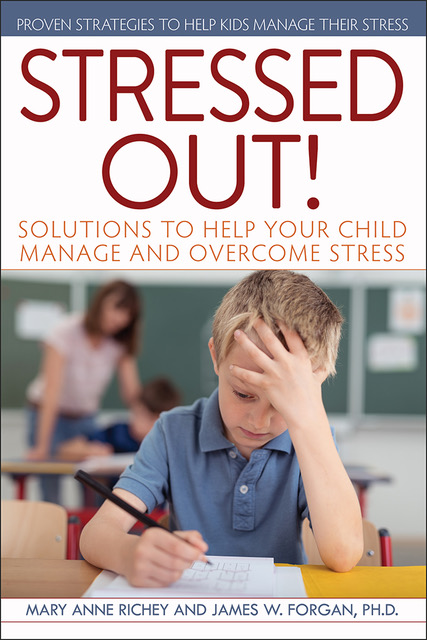
I coauthored a book on helping children manage stress that has many other practical ideas you can use right away.  It’s available on Amazon.

About 30% of kids with stress need professional help.  If you’ve tried the above strategies, consider contacting our office to help your child with stress and anxiety.  Another source to find a professional counselor is the South Florida Association of Christian Counselors. You can reach us at (561) 625-4125.

Preparing Your Child for Hurricane Stress

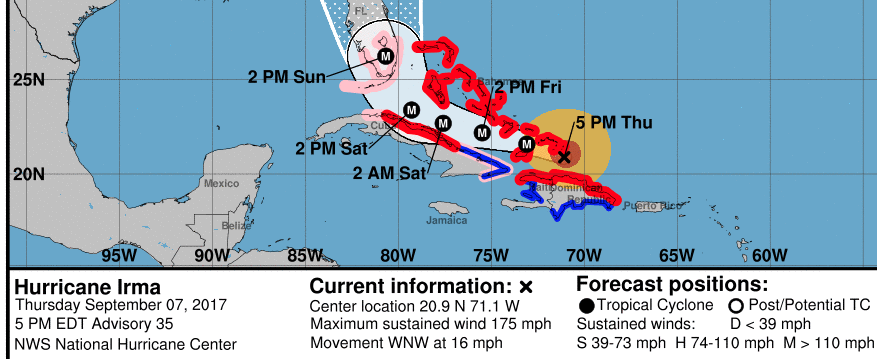
Children face the same type of distress as you as we all prepare to experience a major hurricane. Young children have never experienced hurricane stress like this. You must prepare your child without scaring them. I recommend you evacuate the area if you have children under 10 years old. If you stay for the hurricane explain that this will be a really bad storm and there could be a lot of unusual noise such as banging, pounding, howling wind, and clattering. Prepare your child for the atmospheric pressure change that may occur in their ears. Your child may feel like they are on an airplane with the changing air pressure surrounding the storm.

Hurricane Irma

It appears Hurricane Irma will make landfall during daylight hours which is beneficial and less scary for children who are naturally afraid of the dark. Show your child the safe space in your home and discuss how you may be in there for hours. Explain that you need them to be on their best behavior and do what mom and dad say. Have quiet activities for your child to do during the storm such as coloring or watching a video using headphones. Have your child’s blanket, snuggie, lovey, or what ever you call her security item with you at all times.  Allow your child to comfort her baby doll or your pet because she will simultaneously be comforting herself.

During the storm process your child may require additional reassurance that everything will be all right. She may want to stay by your side. Some children experience heightened emotions and moods. These are all typical behaviors from stress. As I wrote in, Stressed Out! Solutions to Help Your Child Manage Stress, children’s stress may emerge in unusual behaviors or rituals. Your child’s agitation might manifest as hyper energy or an inability to self calm and settle down. This experience causes some children to overgeneralize and believe any storm will have the same intensity as Hurricane Irma.

Three strategies to help children manage hurricane stress

After the storm, try these three strategies to help your child manage stress. First, ask your child to draw a picture of the hurricane experience. Art can be therapeutic and it helps children express inner feelings. After your child is finished with the picture ask, “Tell me about your drawing.” Allow the child to explain their art. Your child won’t have a right or wrong answer but just follow his lead and ask open-ended questions.

If your child is now fearful of any storm, create a written plan. List out the steps you’ll take if there is a storm. Post these on the refrigerator. Then help your child practice a positive inner dialogue by saying, “It was scary during Irma but I was ok. I’ll be ok during this storm too.”

Third, once in recovery mode, involve your child in helping because children feel valued when they can help. For example, your child may hold a bake sale to raise money to donate to an organization such as the Red Cross. When your child helps others it helps place her focus on others and take her mind off of her worries.

Call us if you need professional help managing your child’s stress.

Helping Stressed Out Children

Stress. It is a constant in today’s society. Whereas some level of stress can keep us motivated and engaged, too much can overwhelm and exhaust us. Stress is not the exclusive domain of adults anymore. It is concerning that negative signs of stress are becoming increasingly common in children today, even in toddlers and preschoolers, as society has become more hyper-connected and its demands have become more frenetic. Pediatricians report an uptick in the number of patient visits related to stress, even in children as young as kindergarten and first grade.

Helping Stressed Out Children

When your child is stressed and anxious, you may feel it and see it in your child’s behaviors or he or she may suffer silently. Increased emotion, sensitivity, and tears are just a few of the ways stress overload emerges in children. Changes in eating habits and sleep are also common warning signs that stress could be developing into a problem. Learning more about stress is an important step in helping your child learn how to handle stress, which is a skill set that will be invaluable regardless of the age. There are many things you can do to help your child perceive challenges accurately, develop effective solutions to events, and keep stress in perspective

Your own responses to stress provide your child with the best examples of how to respond to changing situations and challenges. Children often mirror parents’ behaviors and attitudes. I’ve recently co-authored a book to help you and your child. It can help you as you and your child face the daily challenges of life so energy won’t be sapped by indecision and worry but will be channeled into productive ways to handle stress. It’s titled Stressed Out! Solutions for Helping Your Child Manage Stress and available in book stores and online.